

History
The Endowed Applied Vision Research Laboratory brings together two research traditions at the Tübingen Centre for Ophthalmology, each with its own history: the Basic Research in Ophthalmology group — known as the "Bende Lab" — at the University Eye Hospital, and the Junior Research Group Applied Vision Research at the Institute for Ophthalmic Research. This page traces the origins of both groups and remembers Professor Thomas Bende, who led the former for more than three decades and whose sudden death in December 2025 preceded the merger.
The Section for Experimental Ophthalmic Surgery and Refractive Surgery (since 1991)
The older of the two lineages goes back to 1991, when the Section for Experimental Ophthalmic Surgery and Refractive Surgery was founded at the University Eye Hospital Tübingen under its then-director, Professor H.-J. Thiel. Its scientific founding team — Professor Benedikt Jean and Dr. rer. nat. Thomas Bende — set out to make the then-revolutionary laser technology safe for use in ophthalmology. Work in these pioneering years centred on laser–tissue interaction with the excimer laser, establishing the physical basis for refractive procedures such as PRK and LASIK that are now practised worldwide, together with the measurement techniques they require.
The endowed laboratory ("Bende Lab")
To secure continuous and independent research, the Section was expanded by an endowed laboratory for basic ophthalmological research. Following the retirement of Professor Benedikt Jean in 2012 — and building on Thomas Bende's habilitation in 2002 — this laboratory was established as a distinct pillar, widely known as the "Bende Lab", and became an integral part of the Institute for Ophthalmic Research under Professor Bende's leadership.
This independence was made possible above all by private support. The Dr. Ernst und Wilma Müller-Stiftung has been the laboratory's mainstay, ensuring continuity in its medical-technology development to this day; for a period, the Henning Zügel Stiftung provided additional support.
Over more than thirty years, the laboratory's hallmark was the translation of physical and engineering principles into ophthalmic practice. Its work spanned laser–tissue interaction and refractive surgery; the development of ophthalmic instruments for surgery and diagnostics — among them video keratometry combined with optical biometry, a hand-held rebound tonometer, stereo pupillometry, and the modernised Förster binocular ophthalmoscope; the introduction of new measurement principles to ophthalmology, such as non-contact photoacoustic spectroscopy and dielectric spectroscopy; and, more recently, digital diagnostics and robot-assisted cataract surgery. Teaching and the supervision of Bachelor's, Master's, and doctoral researchers at the interface of medicine, physics, and engineering were an equally lasting part of its mission.
A more detailed account of the Bende Lab and its projects can be found here, a list of publications of the Bende Lab can be found here.
The Junior Research Group Applied Vision Research
The second lineage is more recent. The Junior Research Group Applied Vision Research, led by Torsten Straßer at the Institute for Ophthalmic Research, grew out of funding from the Carl Zeiss Stiftung. Its research combines experimental and computational approaches to vision science — electrophysiology, optical coherence tomography, eccentric infrared photorefraction, pupillography, psychophysics, and data-science methods — with a particular focus on visual function testing, presbyopia, and myopia. Its flagship project develops wireless, neuronally controlled contact and intraocular lenses that mimic the natural accommodation of the young eye.
The merger
After Professor Bende's unexpected death in December 2025, the two groups were brought together under the leadership of Torsten Straßer, to preserve the continuity of their scientific projects and technological expertise. Within the Institute for Ophthalmic Research, the long-standing research activities of the Bende Lab are continued and further developed in this new structure — the Endowed Applied Vision Research Laboratory. The Section for Experimental Ophthalmic Surgery and Refractive Surgery continues under the leadership of PD Dr. med. M. Leitritz.
In memoriam — Professor Thomas Bende
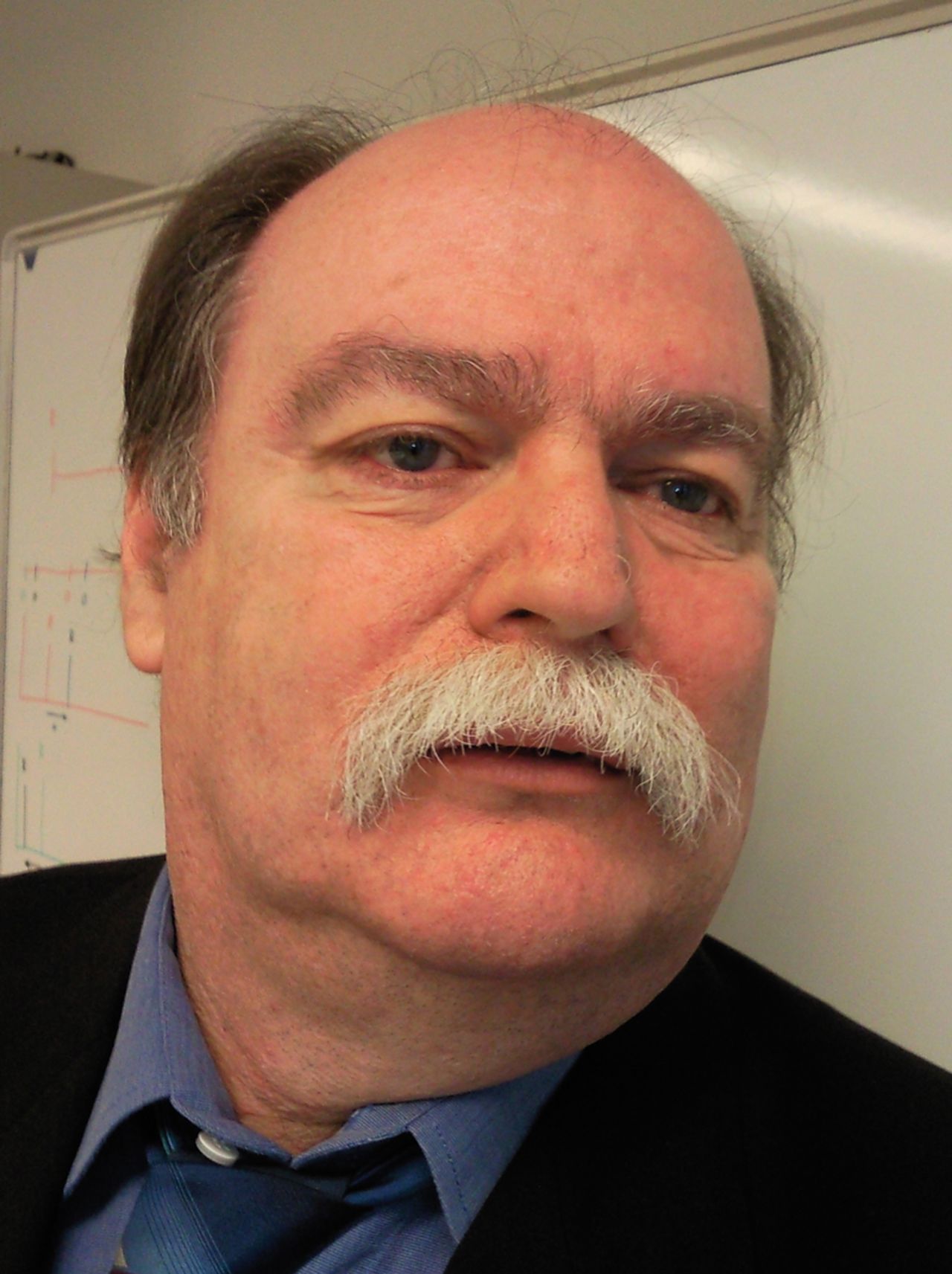
The Section looks back on more than three decades of pioneering research under apl. Prof. Dr. rer. nat. Thomas Bende, who passed away in December 2025. A long-standing member of the Medical Faculty of the University of Tübingen, and a respected reviewer and active contributor within national and international scientific societies — among them the German Ophthalmological Society (DOG), the Association for Research in Vision and Ophthalmology (ARVO), and the American Society of Cataract and Refractive Surgery (ASCRS) — he helped shape the scientific discourse in his field.
His expertise in the development of medical instruments and procedures is documented in numerous publications and was recognised at national congresses. His work as a scientist and pioneer of experimental ophthalmic surgery — bridging physical research and clinical application for over thirty years — remains a lasting legacy of Tübingen ophthalmology.